

Weight Loss Tips: A Complete Guide to Losing Weight Safely and Naturally
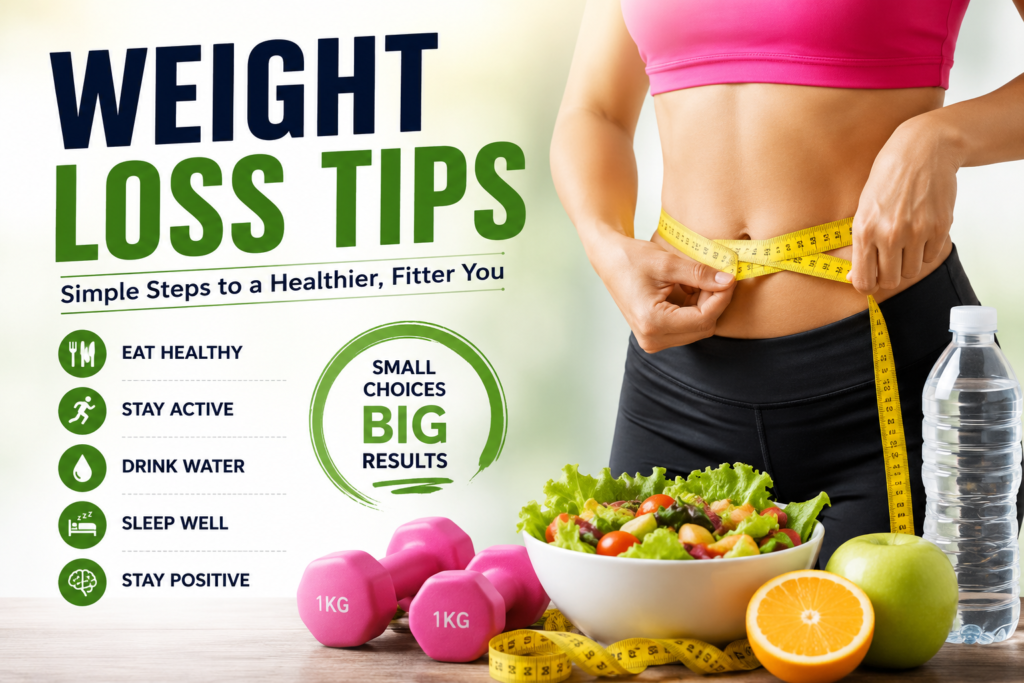
Weight loss is one of the most common health goals, but it can also be one of the most confusing. With countless diets, workout plans, and supplements available, it’s easy to feel overwhelmed. The good news is that sustainable weight loss doesn’t require extreme measures. By adopting healthy habits and staying consistent, you can achieve your fitness goals while improving your overall health. In this comprehensive guide, you’ll discover practical, science-backed weight loss tips that actually work. Why Healthy Weight Loss Matters Losing excess weight offers numerous health benefits, including: Reduces the risk of heart disease Lowers blood pressure Improves blood sugar control Boosts energy levels Enhances self-confidence Improves sleep quality Reduces joint pain Supports better mental health Remember, healthy weight loss is about becoming healthier—not just looking thinner. 1. Set Realistic Goals Avoid expecting dramatic results overnight. Instead, aim for: Losing 0.5–1 kg (1–2 pounds) per week Building healthy habits Focusing on long-term progress Small achievements lead to lasting success. 2. Eat More Protein Protein helps: Reduce hunger Increase fullness Preserve muscle during weight loss Boost metabolism slightly Good protein sources include: Eggs Chicken breast Fish Greek yogurt Cottage cheese Lentils Beans Tofu Try to include protein in every meal. 3. Drink More Water Water can naturally reduce calorie intake by making you feel fuller. Tips: Drink a glass of water before meals. Replace sugary drinks with water. Stay hydrated throughout the day. Aim for 2–3 liters daily depending on your activity level. 4. Eat Whole Foods Choose foods that are minimally processed. Examples: Eat More Fruits Vegetables Whole grains Lean meats Fish Nuts Seeds Legumes Limit Sugary snacks Fast food Processed meat Soft drinks Candy Refined carbohydrates Whole foods keep you satisfied longer. 5. Control Portion Sizes Healthy food can still cause weight gain if eaten excessively. Simple tricks: Use smaller plates. Eat slowly. Stop eating when you’re 80% full. Avoid eating directly from large packages. 6. Reduce Sugar Intake Too much added sugar contributes to weight gain. Watch out for: Soda Energy drinks Sweetened coffee Cakes Cookies Ice cream Choose natural fruits when craving something sweet. 7. Exercise Regularly Exercise burns calories and improves overall health. Best exercises for weight loss: Cardio Walking Running Cycling Swimming Jump rope Strength Training Squats Deadlifts Push-ups Pull-ups Bench press Dumbbell workouts Aim for: 150–300 minutes of moderate exercise each week. Strength training at least 2–3 times per week. 8. Increase Daily Activity You don’t have to spend hours in the gym. Increase movement by: Taking the stairs Walking after meals Parking farther away Standing while working Doing household chores Small movements add up over time. 9. Sleep Well Poor sleep can increase hunger hormones and cravings. Adults should aim for: 7–9 hours of quality sleep every night. Better sleep supports recovery, metabolism, and appetite regulation. 10. Manage Stress Chronic stress can lead to emotional eating. Healthy stress management techniques include: Meditation Yoga Deep breathing Reading Walking outdoors Spending time with loved ones 11. Avoid Liquid Calories Many beverages contain hidden calories. Limit: Soda Sweet tea Alcohol Milkshakes Sweetened fruit juices Choose: Water Black coffee (without excess sugar) Green tea Herbal tea 12. Eat Slowly Your brain needs about 20 minutes to recognize fullness. Slow eating helps: Reduce calorie intake Improve digestion Prevent overeating Chew your food thoroughly and avoid distractions like television or phones. 13. Track Your Progress Keep track of: Weight Body measurements Workout performance Food intake Progress photos Tracking helps you stay motivated and identify what works best. 14. Don’t Skip Meals Skipping meals often leads to: Strong cravings Overeating later Reduced energy Instead, eat balanced meals at regular intervals. 15. Be Consistent Consistency beats perfection. One unhealthy meal won’t ruin your progress—but giving up might. Focus on: Better choices most of the time Regular exercise Long-term healthy habits Sample Healthy Weight Loss Meal Plan Breakfast Oatmeal with berries and almonds Boiled eggs Green tea Snack Apple Handful of nuts Lunch Grilled chicken Brown rice Mixed vegetables Snack Greek yogurt Dinner Grilled fish Salad Steamed broccoli Common Weight Loss Mistakes Avoid these common pitfalls: Following crash diets Skipping breakfast Drinking sugary beverages Eating too many processed foods Ignoring strength training Sleeping too little Being inconsistent Expecting instant results Healthy Habits That Make a Difference Plan meals ahead. Prepare healthy snacks. Read nutrition labels. Cook at home more often. Stay active every day. Celebrate small victories. Stay patient and trust the process.