

Weight Gain Tips: A Complete Guide to Building Healthy Body Mass
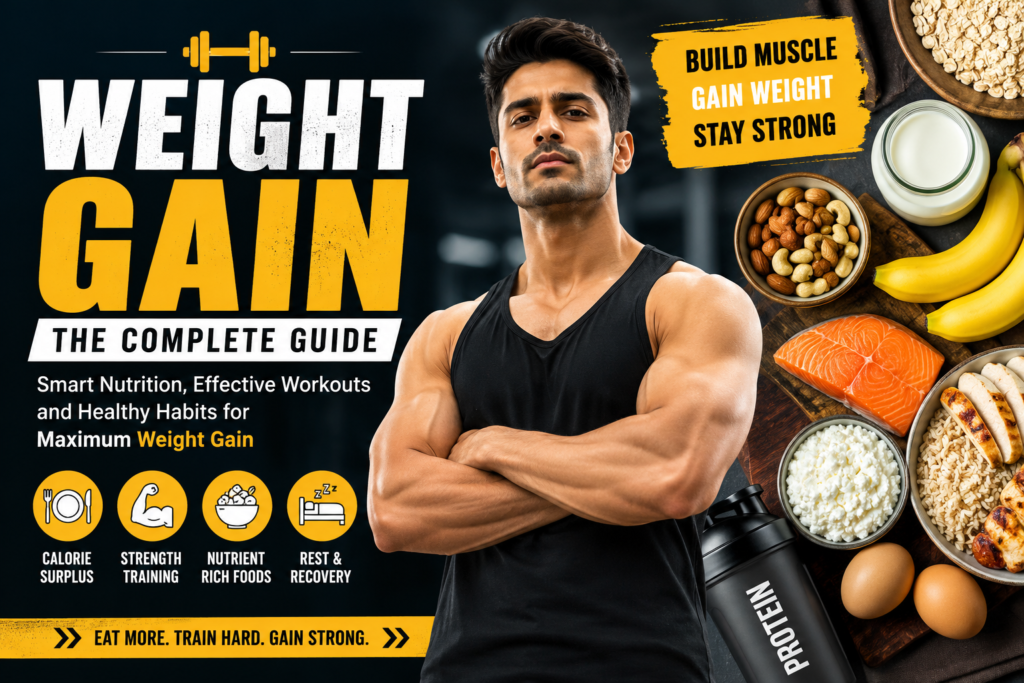
Weight Gain Tips: A Complete Guide to Healthy Weight Gain Many people struggle to gain weight despite eating regularly. Whether you’re naturally skinny, recovering from an illness, or looking to build muscle, healthy weight gain requires a balanced approach. Simply eating junk food isn’t the answer—instead, focus on nutritious foods, strength training, and consistency. In this comprehensive guide, you’ll learn practical and science-backed tips to gain weight in a healthy and sustainable way. Why Is It Difficult to Gain Weight? Several factors can make weight gain challenging, including: Fast metabolism Genetics Poor appetite High physical activity Medical conditions Stress and anxiety If you’ve experienced sudden or unexplained weight loss, consult a healthcare professional before starting a weight gain plan. 1. Eat More Calories Than You Burn To gain weight, your body needs a calorie surplus. Aim to consume 300–500 extra calories per day for gradual weight gain. If you want faster results, increase your intake by 500–700 calories daily. Best High-Calorie Healthy Foods Brown rice Oats Whole wheat bread Sweet potatoes Bananas Avocados Peanut butter Nuts and seeds Full-fat dairy products Olive oil Eggs Chicken breast Fish Lean beef 2. Increase Protein Intake Protein helps repair muscles and promotes lean muscle growth. Aim for: 1.6–2.2 grams of protein per kilogram of body weight daily. Excellent Protein Sources Eggs Chicken Fish Paneer Greek yogurt Milk Lentils Chickpeas Tofu Whey protein 3. Eat Frequently Instead of three large meals, try: Breakfast Mid-morning snack Lunch Evening snack Dinner Bedtime snack Eating every 3–4 hours makes it easier to consume enough calories. 4. Choose Nutrient-Dense Foods Avoid relying on sugary snacks and fast food. Choose foods rich in: Protein Healthy fats Complex carbohydrates Vitamins Minerals Healthy weight gain means gaining muscle—not just body fat. 5. Strength Training Is Essential Resistance training tells your body to convert extra calories into muscle. Best Exercises Squats Deadlifts Bench Press Pull-Ups Overhead Press Lunges Barbell Rows Train 3–5 times per week, focusing on progressive overload by gradually increasing weights. 6. Drink High-Calorie Smoothies Liquid calories are easier to consume than large meals. Healthy Weight Gain Smoothie Recipe Ingredients: 2 bananas 2 cups whole milk 2 tablespoons peanut butter 1 cup oats Honey Whey protein (optional) This smoothie provides a substantial amount of calories, protein, and healthy carbohydrates. 7. Include Healthy Fats Healthy fats are calorie-dense and nutritious. Good options include: Almonds Walnuts Cashews Chia seeds Flaxseeds Peanut butter Olive oil Coconut 8. Don’t Skip Breakfast A nutritious breakfast fuels your body and increases your daily calorie intake. Healthy Breakfast Ideas Oatmeal with nuts and banana Peanut butter toast with milk Vegetable omelet with whole wheat bread Greek yogurt with granola 9. Stay Hydrated (But Don’t Drink Before Meals) Drink enough water throughout the day, but avoid filling up on water immediately before eating, as it may reduce your appetite. 10. Get Enough Sleep Muscles grow during recovery—not while you’re exercising. Aim for: 7–9 hours of quality sleep every night Good sleep also supports hormone balance and muscle recovery. 11. Track Your Progress Weigh yourself once a week. Track: Body weight Strength improvements Muscle measurements Progress photos Adjust your calorie intake if your weight isn’t increasing after a few weeks. Sample Weight Gain Meal Plan Breakfast Oatmeal with banana Peanut butter toast 2 boiled eggs Glass of whole milk Morning Snack Handful of mixed nuts Greek yogurt Lunch Brown rice Grilled chicken or paneer Vegetables Salad Evening Snack Weight gain smoothie Peanut butter sandwich Dinner Whole wheat chapati Fish or chicken Mixed vegetables Before Bed Glass of milk Almonds or walnuts Foods to Eat More Often Rice Potatoes Oats Pasta Whole milk Cheese Yogurt Eggs Chicken Fish Lean meat Peanut butter Nuts Seeds Bananas Avocados Dried fruits Common Mistakes to Avoid Skipping meals Eating too little protein Avoiding strength training Depending only on junk food Not sleeping enough Expecting instant results Inconsistent eating habits Frequently Asked Questions (FAQs) How long does it take to gain weight? Healthy weight gain usually occurs at a rate of 0.25–0.5 kg (0.5–1 lb) per week with a consistent calorie surplus and strength training. Can I gain weight without exercise? Yes, but much of the weight gained may be body fat. Strength training helps ensure that more of the gain comes from lean muscle. Are weight gain supplements necessary? Not necessarily. Most people can meet their calorie and protein needs through whole foods. Supplements like whey protein can be convenient if you’re struggling to consume enough protein. Is fast food good for weight gain? Fast food may increase calories, but it often lacks essential nutrients and can negatively affect long-term health. Focus on nutrient-dense, whole foods instead.
Weight Loss Tips: A Complete Guide to Losing Weight Safely and Naturally
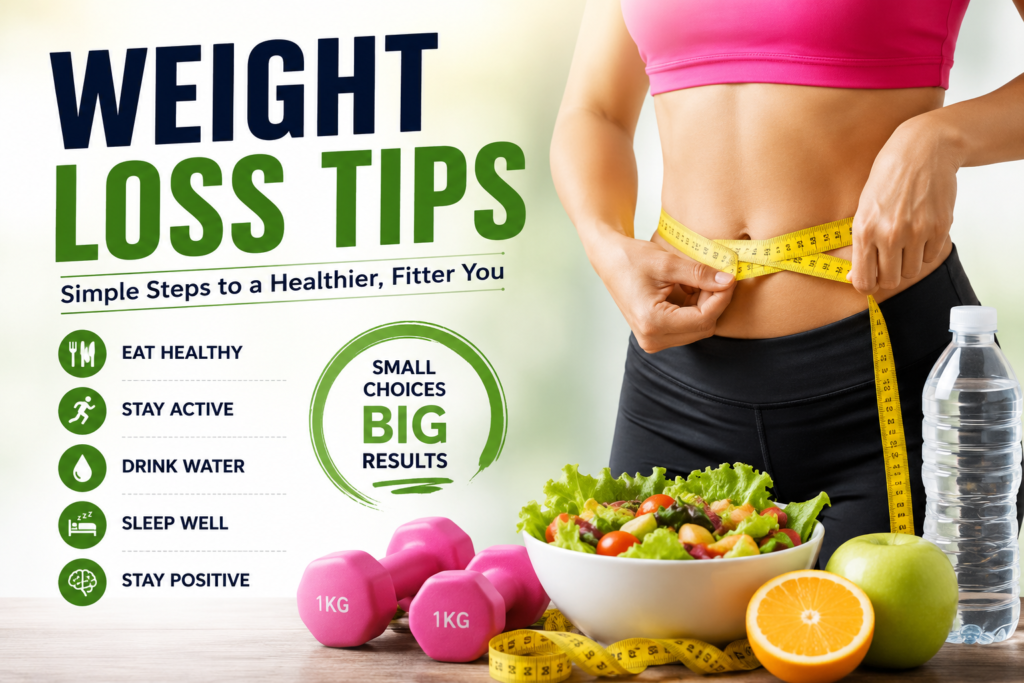
Weight loss is one of the most common health goals, but it can also be one of the most confusing. With countless diets, workout plans, and supplements available, it’s easy to feel overwhelmed. The good news is that sustainable weight loss doesn’t require extreme measures. By adopting healthy habits and staying consistent, you can achieve your fitness goals while improving your overall health. In this comprehensive guide, you’ll discover practical, science-backed weight loss tips that actually work. Why Healthy Weight Loss Matters Losing excess weight offers numerous health benefits, including: Reduces the risk of heart disease Lowers blood pressure Improves blood sugar control Boosts energy levels Enhances self-confidence Improves sleep quality Reduces joint pain Supports better mental health Remember, healthy weight loss is about becoming healthier—not just looking thinner. 1. Set Realistic Goals Avoid expecting dramatic results overnight. Instead, aim for: Losing 0.5–1 kg (1–2 pounds) per week Building healthy habits Focusing on long-term progress Small achievements lead to lasting success. 2. Eat More Protein Protein helps: Reduce hunger Increase fullness Preserve muscle during weight loss Boost metabolism slightly Good protein sources include: Eggs Chicken breast Fish Greek yogurt Cottage cheese Lentils Beans Tofu Try to include protein in every meal. 3. Drink More Water Water can naturally reduce calorie intake by making you feel fuller. Tips: Drink a glass of water before meals. Replace sugary drinks with water. Stay hydrated throughout the day. Aim for 2–3 liters daily depending on your activity level. 4. Eat Whole Foods Choose foods that are minimally processed. Examples: Eat More Fruits Vegetables Whole grains Lean meats Fish Nuts Seeds Legumes Limit Sugary snacks Fast food Processed meat Soft drinks Candy Refined carbohydrates Whole foods keep you satisfied longer. 5. Control Portion Sizes Healthy food can still cause weight gain if eaten excessively. Simple tricks: Use smaller plates. Eat slowly. Stop eating when you’re 80% full. Avoid eating directly from large packages. 6. Reduce Sugar Intake Too much added sugar contributes to weight gain. Watch out for: Soda Energy drinks Sweetened coffee Cakes Cookies Ice cream Choose natural fruits when craving something sweet. 7. Exercise Regularly Exercise burns calories and improves overall health. Best exercises for weight loss: Cardio Walking Running Cycling Swimming Jump rope Strength Training Squats Deadlifts Push-ups Pull-ups Bench press Dumbbell workouts Aim for: 150–300 minutes of moderate exercise each week. Strength training at least 2–3 times per week. 8. Increase Daily Activity You don’t have to spend hours in the gym. Increase movement by: Taking the stairs Walking after meals Parking farther away Standing while working Doing household chores Small movements add up over time. 9. Sleep Well Poor sleep can increase hunger hormones and cravings. Adults should aim for: 7–9 hours of quality sleep every night. Better sleep supports recovery, metabolism, and appetite regulation. 10. Manage Stress Chronic stress can lead to emotional eating. Healthy stress management techniques include: Meditation Yoga Deep breathing Reading Walking outdoors Spending time with loved ones 11. Avoid Liquid Calories Many beverages contain hidden calories. Limit: Soda Sweet tea Alcohol Milkshakes Sweetened fruit juices Choose: Water Black coffee (without excess sugar) Green tea Herbal tea 12. Eat Slowly Your brain needs about 20 minutes to recognize fullness. Slow eating helps: Reduce calorie intake Improve digestion Prevent overeating Chew your food thoroughly and avoid distractions like television or phones. 13. Track Your Progress Keep track of: Weight Body measurements Workout performance Food intake Progress photos Tracking helps you stay motivated and identify what works best. 14. Don’t Skip Meals Skipping meals often leads to: Strong cravings Overeating later Reduced energy Instead, eat balanced meals at regular intervals. 15. Be Consistent Consistency beats perfection. One unhealthy meal won’t ruin your progress—but giving up might. Focus on: Better choices most of the time Regular exercise Long-term healthy habits Sample Healthy Weight Loss Meal Plan Breakfast Oatmeal with berries and almonds Boiled eggs Green tea Snack Apple Handful of nuts Lunch Grilled chicken Brown rice Mixed vegetables Snack Greek yogurt Dinner Grilled fish Salad Steamed broccoli Common Weight Loss Mistakes Avoid these common pitfalls: Following crash diets Skipping breakfast Drinking sugary beverages Eating too many processed foods Ignoring strength training Sleeping too little Being inconsistent Expecting instant results Healthy Habits That Make a Difference Plan meals ahead. Prepare healthy snacks. Read nutrition labels. Cook at home more often. Stay active every day. Celebrate small victories. Stay patient and trust the process.
Gym Exercises: Loss Weight
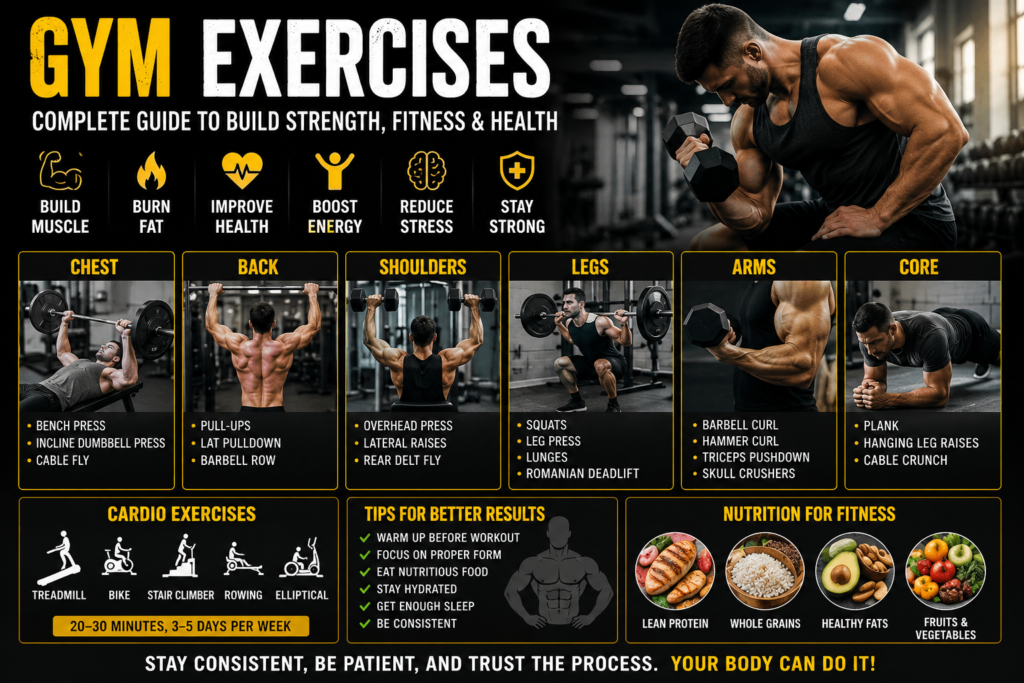
Introduction Regular gym exercise is one of the most effective ways to improve your overall health, increase strength, lose body fat, and boost confidence. Whether you’re a beginner stepping into the gym for the first time or an experienced fitness enthusiast, following a structured workout routine can help you achieve your fitness goals faster. In this guide, we’ll cover the best gym exercises for every major muscle group, explain their benefits, and provide tips to maximize your results. Why Gym Exercises Are Important Working out at the gym provides numerous physical and mental health benefits, including: Improves muscle strength and endurance Helps burn calories and lose weight Increases bone density Boosts heart health Reduces stress and anxiety Improves posture and flexibility Enhances energy levels Builds self-confidence Consistency is the key to seeing long-term improvements. Warm-Up Before Every Workout Before lifting weights or using gym machines, spend 5–10 minutes warming up. Effective Warm-Up Exercises Brisk walking Light jogging Jump rope Arm circles Bodyweight squats Dynamic stretches A proper warm-up increases blood flow and reduces the risk of injuries. Best Chest Exercises 1. Barbell Bench Press The bench press is one of the most popular strength-building exercises. Benefits: Builds chest muscles Strengthens shoulders Improves triceps power Sets & Reps 4 sets 8–12 reps 2. Incline Dumbbell Press Targets the upper chest for a balanced physique. Benefits Better chest development Improves muscle symmetry Enhances upper body strength 3. Cable Fly Perfect for chest isolation. Focus on controlled movement rather than heavy weight. Best Back Exercises 1. Pull-Ups Pull-ups are one of the best bodyweight exercises. Muscles Worked Lats Biceps Upper back 2. Lat Pulldown Ideal for beginners who cannot perform pull-ups. 3. Barbell Bent-Over Row Builds back thickness and improves posture. Best Shoulder Exercises 1. Overhead Shoulder Press Builds strong shoulders while improving overall upper-body strength. 2. Lateral Raises Excellent for wider shoulders. Use light weights and maintain proper form. 3. Rear Delt Fly Strengthens the rear shoulders and improves posture. Best Leg Exercises 1. Barbell Squats Known as the King of Exercises, squats work multiple muscle groups. Benefits Builds powerful legs Strengthens core Burns more calories Improves athletic performance 2. Leg Press A safer alternative for beginners. 3. Romanian Deadlift Targets: Hamstrings Glutes Lower back 4. Walking Lunges Improves balance, coordination, and leg strength. Best Arm Exercises Biceps Barbell Curl A classic exercise for building bigger biceps. Hammer Curl Targets both the biceps and forearms. Triceps Triceps Pushdown One of the most effective cable exercises. Skull Crushers Builds triceps size and strength. Best Core Exercises 1. Plank Improves: Core stability Balance Posture Hold for 30–60 seconds. 2. Hanging Leg Raises Great for lower abs. 3. Cable Crunch Adds resistance for stronger abdominal muscles. Cardio Exercises Adding cardio to your routine improves heart health and burns calories. Popular options include: Treadmill Stationary bike Stair climber Rowing machine Elliptical trainer Aim for 20–30 minutes of moderate cardio, 3–5 days per week. Sample Weekly Gym Workout Plan Monday – Chest & Triceps Bench Press Incline Dumbbell Press Cable Fly Triceps Pushdown Skull Crushers Tuesday – Back & Biceps Pull-Ups Lat Pulldown Barbell Row Barbell Curl Hammer Curl Wednesday – Legs Squats Leg Press Romanian Deadlift Walking Lunges Standing Calf Raises Thursday – Rest or Light Cardio Take a brisk walk or do stretching and mobility exercises. Friday – Shoulders Overhead Press Lateral Raises Rear Delt Fly Shrugs Saturday – Core & Cardio Plank Hanging Leg Raises Cable Crunch 30 minutes of cardio Sunday – Rest Allow your body to recover and rebuild. Nutrition Tips for Better Results Exercise alone isn’t enough. Proper nutrition plays a major role in reaching your fitness goals. Focus on: Lean protein (chicken, fish, eggs, tofu, beans) Whole grains (brown rice, oats, quinoa) Healthy fats (nuts, seeds, avocado, olive oil) Plenty of fruits and vegetables Drinking 2–3 liters of water daily For muscle growth, consume adequate protein and maintain a slight calorie surplus. For fat loss, create a moderate calorie deficit while keeping protein intake high. Common Gym Mistakes to Avoid Skipping warm-ups Using improper form Lifting weights that are too heavy Ignoring rest days Neglecting nutrition Not tracking progress Inconsistent workouts Avoiding these mistakes can help reduce injuries and improve long-term results. Tips for Beginners Start with lighter weights and master proper technique. Follow a structured workout program. Increase weights gradually as you get stronger. Prioritize sleep and recovery. Stay consistent and patient—results take time. Frequently Asked Questions (FAQs) How many days a week should I exercise? Most people benefit from 3–5 gym sessions per week, depending on their fitness level and goals. Is cardio necessary? Cardio supports heart health, endurance, and calorie burning. Combining cardio with strength training offers well-rounded fitness benefits. How long should a gym workout last? A typical workout lasts 45–75 minutes, including warm-up and cool-down. Can beginners lift heavy weights? Beginners should focus on proper form first. Increase weight gradually once you can perform exercises safely and consistently. Conclusion Gym exercises are one of the most effective ways to improve your health, build muscle, increase strength, and enhance overall well-being. By following a balanced workout plan, eating nutritious foods, and allowing enough time for recovery, you can make steady progress toward your fitness goals. Remember, success in fitness comes from consistency—not perfection. Start where you are, stay committed, and enjoy the journey to a stronger, healthier you.